South African clothing factories struggle after migrant workers flee

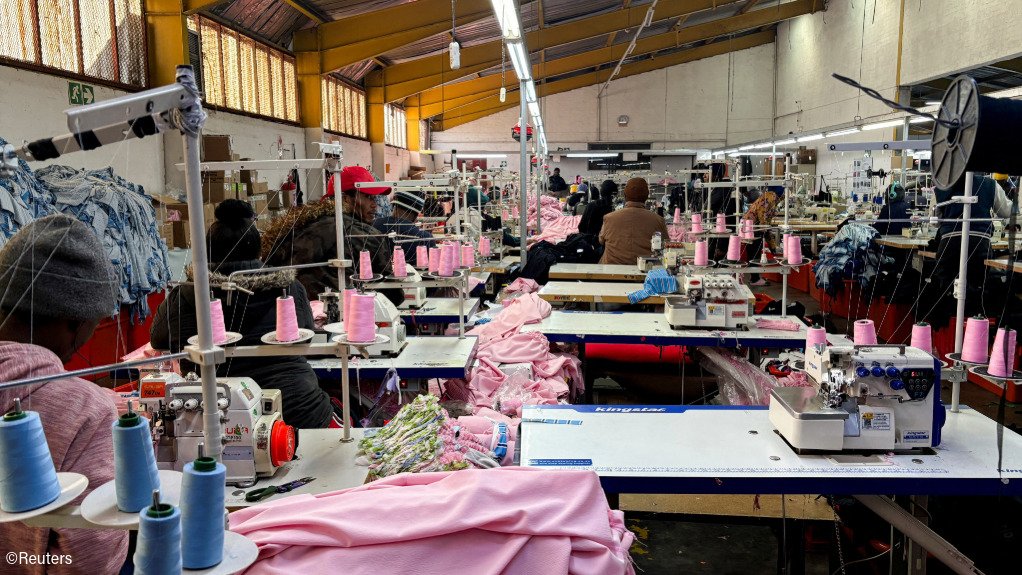


Weeks after xenophobic protests drove thousands of migrant workers from South Africa, rows of sewing machines stood idle at a clothing factory in Newcastle, a manufacturing hub in the eastern province of KwaZulu-Natal.
The campaign led by anti-immigrant group March and March sought to free up jobs for South Africans, a third of whom are unemployed. But local manufacturers have struggled to fill vacancies left by foreign workers.
Reuters visited three factories in late July whose owners said they had lost between 12% and 19% of their workforce during the protests. Some workers had sewing skills in short supply, the owners said, while few locals were willing to take the low-paying jobs.
"People don't want to work in factories," said Mpho Nkosi, a 29-year-old South African administrator at one of the firms.
Migrants typically work in sectors unappealing to locals, analysts say. It is unclear how widespread current labour shortages may be, but there have also been reports of unfilled jobs in sugarcane fields.
A spokesperson for the Department of Employment and Labour said he was unaware of worker shortages and advised employers to seek the department's assistance with recruitment.
SKILLS GAP DISPUTED
Months of anti-immigrant marches and vigilante attacks culminated in a June 30 deadline declared by March and March for undocumented migrants to leave, prompting many to flee.
The group claims immigrants are to blame for South Africa's economic woes, particularly high unemployment, although researchers dispute this. It argues that employers prefer foreigners who accept lower wages.
Factory owners counter that they mostly employ South Africans, while some skilled workers from neighbouring Eswatini and Lesotho are needed for their experience in the garment sector.
"We can't immediately replace these skills with locals," said Alex Liu, a Newcastle factory owner.
Another factory owner, Ronghua Yan, started a training course for seven local employees after losing about 40 foreign workers in June. Financial constraints do not allow him to train more, he said.
The Southern African Clothing and Textile Workers' Union estimates that 15% of Newcastle's 15 000-strong textile workforce left during the protests.
Union representative Siyabonga Ntombela disputed the idea of a skills shortage and said the jobs were not being filled because the pay was too low for South Africans.
"We have plenty of qualified machinists in South Africa," he said, adding that commuting costs also deterred South African workers, while at some factories migrant workers lived on site.
Labour market researcher Siphelele Ngidi said attracting South Africans to manufacturing jobs would require a government push to revitalise the sector.
"It's not just the wage alone, it's also the working conditions and the possibility of upward mobility," he said.
LOW WAGES, FEWER ORDERS
Most of Newcastle's garment factories are owned by Chinese nationals who have been in South Africa for decades.
They produce clothing for domestic retailers in an industry the government has championed to reduce reliance on imports and that is vital to Newcastle's economy.
But workers are typically paid per piece completed, meaning only the most productive might earn the national minimum wage of R30.23 an hour. Many earn less.
Factory owners told Reuters they could not afford to raise wages because retailers pay little for their garments. A pair of jeans starts at R11.50, while a T-shirt can fetch less than half that.
The industry suffered a setback in February when government inspections discovered illegal labour practices at some factories.
Liu said most factories had lost retail orders as a result, stressing that not all were equally guilty. While that has reduced the urgency of replacing workers who left, the combined impact could push some factories over the edge, causing more South Africans to lose jobs than gain them, he said.
Liu said his business is operating at a loss and he plans to reassess by December whether to shut down.
"At the moment everybody's wait-and-see. I think there's a possibility we will see a lot of closures in the coming months."
Article Enquiry
Email Article
Save Article
Feedback
To advertise email advertising@creamermedia.co.za or click here

Projects

Latest Multimedia


Showroom

Mitsubishi Chemical Advanced Materials South Africa (Pty) Ltd is a leading manufacturer of high-performance engineering plastics for the mining...
VISIT SHOWROOM
ALBIS FLANGES — founded in 1965 — is a petro-chemical approved manufacturer of flanges and fittings in most grades of steel, listed with Sasol,...
VISIT SHOWROOM



Press Office
Announcements
What's On
Subscribe to improve your user experience...
Option 1 (equivalent of R125 a month):
Receive a weekly copy of Creamer Media's Engineering News & Mining Weekly magazine
(print copy for those in South Africa and e-magazine for those outside of South Africa)
Receive daily email newsletters
Access to full search results
Access archive of magazine back copies
Access to Projects in Progress
Access to ONE Research Report of your choice in PDF format
Option 2 (equivalent of R375 a month):
All benefits from Option 1
PLUS
Access to Creamer Media's Research Channel Africa for ALL Research Reports, in PDF format, on various industrial and mining sectors
including Electricity; Water; Energy Transition; Hydrogen; Roads, Rail and Ports; Coal; Gold; Platinum; Battery Metals; etc.
Already a subscriber?
Forgotten your password?
Receive weekly copy of Creamer Media's Engineering News & Mining Weekly magazine (print copy for those in South Africa and e-magazine for those outside of South Africa)
➕
Recieve daily email newsletters
➕
Access to full search results
➕
Access archive of magazine back copies
➕
Access to Projects in Progress
➕
Access to ONE Research Report of your choice in PDF format
RESEARCH CHANNEL AFRICA
R4500 (equivalent of R375 a month)
SUBSCRIBEAll benefits from Option 1
➕
Access to Creamer Media's Research Channel Africa for ALL Research Reports on various industrial and mining sectors, in PDF format, including on:
Electricity
➕
Water
➕
Energy Transition
➕
Hydrogen
➕
Roads, Rail and Ports
➕
Coal
➕
Gold
➕
Platinum
➕
Battery Metals
➕
etc.
Receive all benefits from Option 1 or Option 2 delivered to numerous people at your company
➕
Multiple User names and Passwords for simultaneous log-ins
➕
Intranet integration access to all in your organisation